All Categories
Featured
Optimizing Enterprise Engagement Via Proven Performance Data
Strategic Marketing Standards Based From Domestic Perform...
Utilizing Competitive Research to Drive Business Results

Documented Business Success Narratives With Verified Outcomes
Table of Contents
Marketing has actually never ever been a static discipline. However as we move into 2026, the speed of modification is no longer driven by flashy new platforms or viral strategies. Rather, growth is progressively formed by how well services comprehend their consumers, structure their marketing systems, and link every strategy back to measurable organization outcomes.
Marketing Trends for 2026: Growth Is Developed on Connected Systems, Not Separated Tactics Among the most important changes heading into 2026 is a relocation away from disconnected marketing activities. Pressing material out on social media, sending a periodic e-mail blast, or running ads without a larger image method typically results in irregular results.
A linked system generally includes: A clear entry point (ads, search, recommendations, social, events) A technique for capturing contact info Ongoing education and nurturing A clear conversion course Follow-up and retention touchpoints Rather of asking, "What should we try next?" services are asking, "How doesmarketing fit into our overall growth engine?" This shift decreases squandered effort andincreases the return on every marketing activity.
Local Business Marketing IndustriesFirst-partyinformation you collect straight from your consumers and potential customers becomes thefoundation of marketing success. This includes: Email addresses Contact number Website habits through analytics and similar tools Purchase history Query forms Survey reactions Why this matters for expanding your customer base: First-party data permits you to interact straight with people who have currently revealed interest.
Analyzing Sector Expansion Patterns Within the United States
Businesses that actively grow and manage their contact lists tend to see: Lower customer acquisition costs Higher retention rates More repeat company Gathering data is no longer optional. It is facilities. And as an owned asset (one you do not have to pay to use, unlike advertising), there is a clear monetary reward to tap this resource.
In 2026, growth-oriented companies are concentrating on mapping and linking the whole client journey. A common journey includes: Consideration (How they discover and evaluate) Decision (How they choose to buy) Post-purchase experience Repeat engagement When these phases are not intentionally developed, consumers may: Feel puzzled about next actions Drop off before converting (e.g.
In 2026, established small companies can't afford to guess where they are losing potential clients. Seo stays a significant client acquisition channel, however the method is altering. Instead of chasing after individual keywords, businesses are building topic authority. This Means: Choosing core topics straight associated to services Publishing multiple pieces that respond to related concerns Internally linking material together Upgrading older material routinely Browse engines significantly reward websites that show thorough understanding in specific areas.
Scalable Business Strategies for Optimized Output
Synthetic intelligence tools are now typical across marketing platforms. The most successful businesses use AI to speed up execution, not replace humandecision-making. Typical reliable uses include: Preparing details and first variations of material Getting multiple headline variations Summing up data and reports Repurposing material into various formats What still needs human oversight: Brand voice Messaging priorities Offer development Customer understanding Reality examining AI assists teams utilizing it move much faster, but method remains human-led.
Instead of only attempting to attract more visitors, organizations are enhancing: Landing page design Headline clarity Calls to action Kind length Page load speed Mobile experience Even little improvements in conversion rate can substantially increase earnings without increasing ad invest or content volume. Example: If 1 out of 100 visitors converts, enhancing that to 2 out of 100 doubles results with the exact same traffic and the exact same advertisement spend.
Consumers are more careful than ever. Before connecting or buying, they try to find proof. Effective trust signals include: Online examines Reviews with specifics Case research studies Photos or videos of work Certifications and affiliations Media points out These elements lower perceived threat and reduce the time it takes someone to feel comfy contacting you.
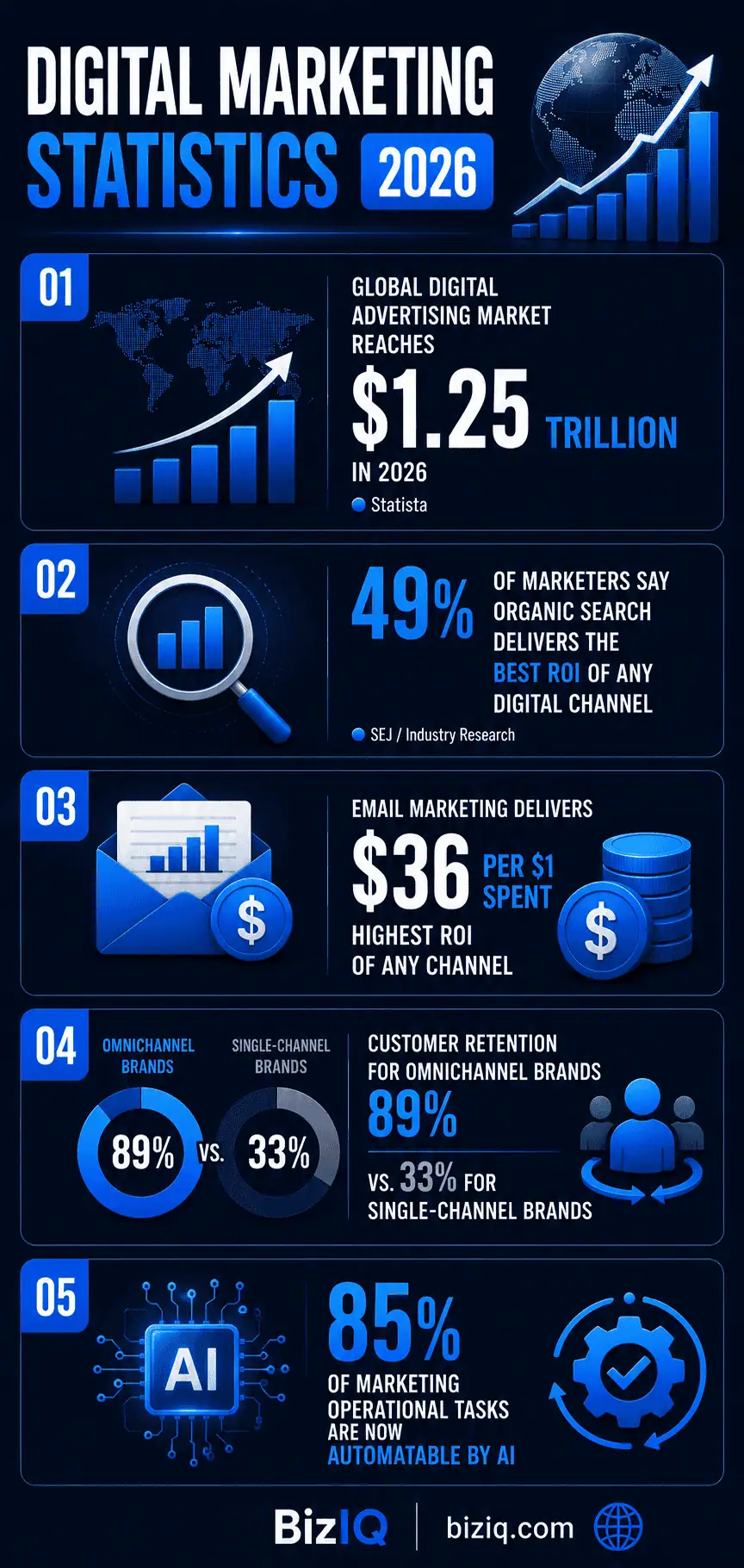
One testimonial helps. Fifty regularly favorable testimonials transform understanding. Email is no longer simply for newsletters or promotions. In 2026, high-performing businesses use e-mail as: An onboarding channel for new leads An education platform A retention tool A reactivation system Automation plays a major function. Typical automated sequences include: Welcome series Educational nurture series Follow-up after query Post-purchase assistance Re-engagement for inactive contacts This makes sure every prospect receives constant communication despite staff capacity.
Evaluating Market Growth Trends Within the United States
Successful advertisements in 2026 focus on value-first offers, such as: Free assessments Guides Webinars Consultations Samples or trials These offers allow prospects to experience worth before making a larger dedication. Paid advertisements end up being entry points into a relationship instead of instant sales presses. Expanding your client base does not only indicate getting new customers.
It's simpler and more economical to keep a client than win brand-new ones. Marketing in 2026 is no longer determined only by impressions or likes. It is (or should be) determined by: Leads generated Conversion rates Profits created Return on ad spend (ROAS) Client lifetime worth increases This shift requires closer alignment between marketing and total company goals.

Table of Contents
Latest Posts
Optimizing Enterprise Engagement Via Proven Performance Data

Strategic Marketing Standards Based From Domestic Performance
Utilizing Competitive Research to Drive Business Results
Latest Posts
Optimizing Enterprise Engagement Via Proven Performance Data
Strategic Marketing Standards Based From Domestic Performance
Utilizing Competitive Research to Drive Business Results